
Inside the UKMHA’s new industry hub
On 8 June 2026 the UKMHA opened the doors to its new training facility and hub for the first time. This report looks at how the new facility will benefit members, and also reflects on the latest outlook from Oxford Economics, which featured at the launch event.
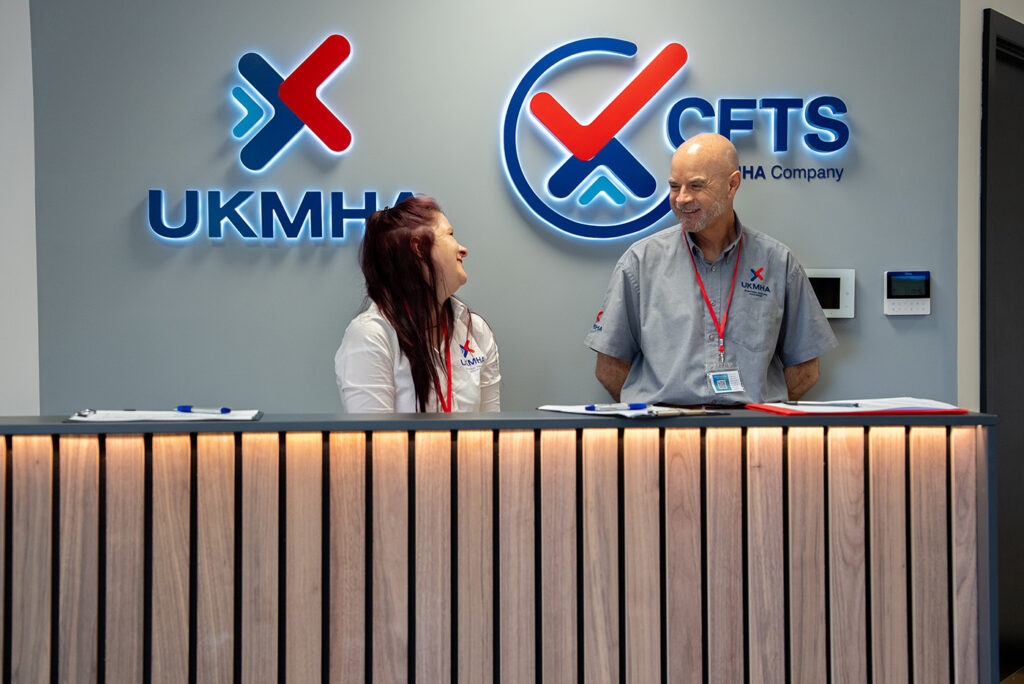
On the edge of the M1’s ‘golden corridor’ for logistics, the UKMHA has met one of its most ambitious goals; a dedicated headquarters and training centre built for – and by – the industry it serves.
Yes, it’s a place for training, but it’s also a place for members to meet industry colleagues, have sales meetings, co-work…
It’s hard (impossible) to think of another industry organisation which has created something for its members on this scale.
It’s a bricks‑and‑mortar statement of intent in sunny Kibworth, “built for the association, for our members to utilise,” said Rob Fisher, UKMHA’s CEO, as he welcomed guests to the launch day in early June.
Industry‑owned skills
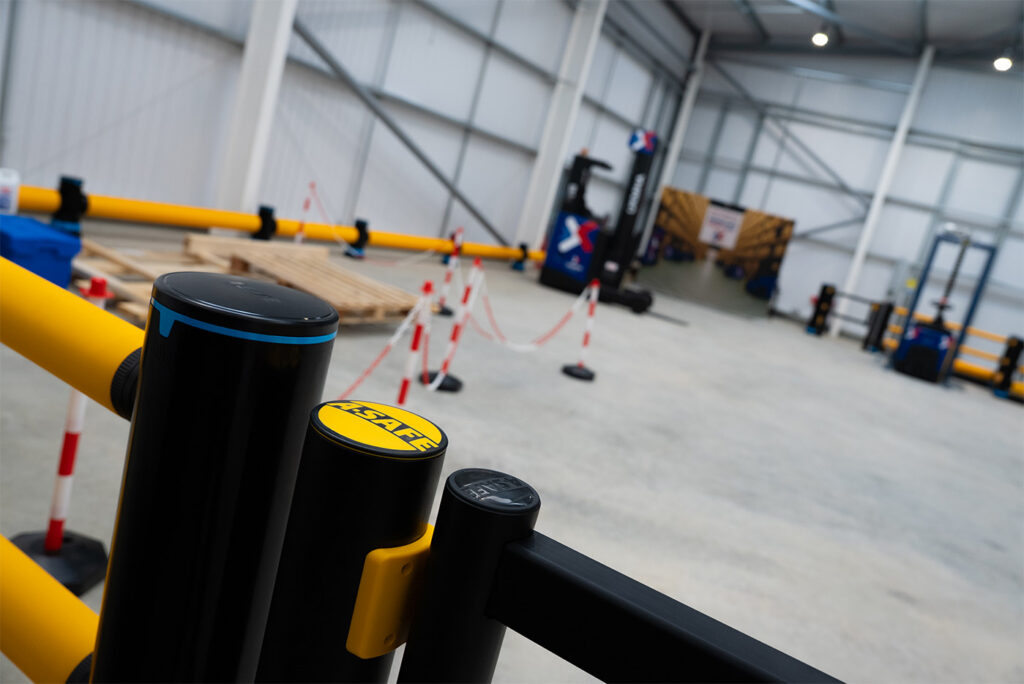
Until now, the UKMHA’s training was largely outsourced. The move to Kibworth changes that. The new facility gives UKMHA the space – and control – to deliver its own hands‑on programmes, develop new curricula at speed and respond directly to members’ changing needs.
The UKMHA plans to:
- Deliver hands‑on training that reflects real workshop and warehouse conditions, not abstract theory.
- Provide applied knowledge that technicians, engineers and managers can use the day after they complete the course.
- Develop the skills the industry needs, from apprentices and field engineers through to senior leaders.
As Paul Dancer, Head of Learning & Development for the UKMHA, explained, the facility is being positioned as an ecosystem rather than a single classroom: a venue for technical courses, “train‑the‑trainer” programmes and, ultimately, development for “every single job role you can imagine in the sector – from administrators all the way through to execs.”
The continued success of CFTS
Following the successful launch of the new CFTS Thorough Examination ‘App’ earlier this year, the demand for accredited Competent Persons continues to grow, and the new facility will be central to ensuring that the training demands can be met.
The App has been designed to support both the technicians carrying out the TE and the businesses managing them, as well as providing an improved customer experience. The digital platform includes an array of inbuilt checklists which, combined with improved workflow and management oversight, significantly increases productivity.
The UKMHA’s CFTS scheme now supports around 600 members, covering 800 depots, and membership is growing at 8–10% a year.
Realities of technician injuries
UKMHA members lose more than 1,000 days a year to workplace injuries – roughly one serious injury for every 80 people employed in the sector each year. Many of those injuries stem from the basics: manual handling, slips, trips and falls. Around 20% of slips, trips and falls result in fractures or dislocations, often from something as simple as stepping out of a van, mis‑stepping off a forklift truck, or tripping over forks.
The new facility will help the industry tackle this with toolbox talks, short safety modules that can be delivered on site or online, and a new manual handling course, which includes a ‘train your trainer’ route enabling larger employers to cascade training internally rather than sending every operator to Kibworth.
Oxford Economics briefing with Jeremy Leonard
In his briefing, Jeremy Leonard from Oxford Economics set out the cross‑currents now shaping demand across the UK industrial and warehouse economy. The US–Israel–Iran war has triggered an energy price shock that is hitting both households and industry: oil prices have spiked more sharply than after Russia’s invasion of Ukraine, threatening consumer spending as more income is spent on fuel.
The key chokepoint, he argued, is the Strait of Hormuz. As long as it remains impaired, the risk of a stagflationary mix – slower growth combined with stubbornly high inflation – remains real. Oxford Economics now expects UK inflation to stay close to 4%, eroding real incomes and squeezing spending, particularly on big‑ticket durables such as cars and machinery that sit upstream of many materials‑handling applications.
Jeremy suggested tariff‑related uncertainty has started to take a back seat compared with the much more immediate impact of energy prices and conflict.
For the UK, the more pressing domestic concern is fiscal and monetary policy. Even if central banks cut policy rates, long‑term borrowing costs remain elevated, reflecting market doubts about governments’ fiscal sustainability.
In the UK, those concerns are “particularly acute” given political uncertainty and tight fiscal rules. That combination risks restraining the very private‑sector investment the economy now needs to offset a retreating state.
For UKMHA members, the message is nuanced rather than bleak. Oxford Economics is not forecasting a broad recession, with growth remaining positive in most major economies outside the Middle East. On the other hand, Jeremy characterised the current industrial truck market as a “victim of its own pandemic‑era success”: orders surged during the e‑commerce boom, then normalised, leaving backlogs exhausted just as organic demand softened. Added to this is a steady influx of imported trucks from China, which has not fallen back in line with weaker domestic orders, raising difficult questions about competitive dynamics in the years ahead.
He also highlighted some brighter points: warehousing and e‑commerce. UK online orders leapt during the pandemic and has stayed high, outpacing the EU benchmark and driving strong growth in warehousing and distribution even as traditional manufacturing has struggled.
Built for members
What does all this mean for current and new UKMHA members?
For existing members, the centre offers a central, purpose‑built hub for assessments, technical training, meetings, networking and standards‑setting. As UKMHA Joint President Andrew Woodward noted, the simple ability to say “let’s meet at the association’s own premises” carries kudos.
For suppliers and specialists, it opens up practical opportunities. Rebecca Smith from Midac UK, for example, is already considering battery‑handling training and workshops at Kibworth, as well as using the workshop and demonstration space to show new starters how batteries perform in real trucks – something her own warehouse, full of batteries but not in forklifts, cannot easily provide.
And, crucially, it sends a powerful signal to future members and future talent. Derek Martin from Champion Forklifts, highlighted what it means for a relatively small association to own such a high‑quality campus: a standalone organisation with its own premises and training facilities, capable of impressing not just members but regulators and the authorities.
He spoke of bringing engineers up to see the site, of how the facility makes taking on an apprentice feel more practical and attractive – and of the broader message it sends about a sector that still “always finds business” even “when the chips are down.”
The facility is not just a new address, but a shared asset – a place where learning matches the reality of the job, not just the theory behind it, and where an industry facing intense economic and operational change has chosen to invest, collectively, in its own resilience.
Closing reflections from members
“This is the best thing that could have happened to the industry… I don’t think you could mirror this in any other country.”
– Mike Barton, B&B Attachments on the new central hub and its potential to attract both dealers and end‑users into membership.
“The location is fantastic… we can use the facilities for sales meetings, and we’re already talking to Paul about battery‑handling training.”
Rebecca Smith, Midac UK, seeing Kibworth as both a neutral meeting ground and a specialist training venue that can showcase batteries in real truck applications.
“It’s really a proud moment… we’ve come a long way from rented offices to our own premises with an adjoining training facility under one roof.”
Andrew Woodward, Close Brothers, on fulfilling a 15‑year vision and giving the association a physical home that members can “stop off” at, use for meetings and shape through feedback.
“Oxford Economics now expects UK inflation to stay close to 4%, eroding real incomes and squeezing spending, particularly on big‑ticket durables such as cars and machinery that sit upstream of many materials‑handling applications.”